World’s Oldest Working Cotton Mill

OUR JOURNEY

The Industrial & Human Heritage of Ellers Mill

From its origins in 1782 along the fast-flowing River Caldew in Dalston, Cumbria,
Ellers Mill stands proudly today as the world’s oldest active, continuously working cotton mill.
For over two centuries, through war, industrial revolutions, and devastating fires,
this remarkable site has adapted to power modern innovation while honoring Cumbrian craft.

1782
Founded on River Caldew
240+
Years of Innovation
Present
Active Global Production

Etymology & Place

Why “Ellers Mill”?

The name “Ellers” comes from the Cumbrian dialect and Old Norse word eller, meaning alder trees.
When the original cotton spinning mill was built in 1782, the banks of the River Caldew at Buckabank in Dalston were densely lined with wild alder groves.

These resilient trees provided stabilizing timber along the riverbank and gave this iconic site its lasting name: Ellers Mill.

Geography & River

The Caldew Advantage

Flowing from Skiddaw in the Lake District, the River Caldew provided rapid, continuous water flow essential for early waterwheel engineering.

This natural hydrologic power made Dalston a focal hub for early industrial textiles, enabling Ellers Mill to outlast almost every peer from the 18th century.

Key Figures & Leaders

The Custodians of Ellers Mill

The story of Ellers Mill is driven by visionary families whose leadership steered the factory through two centuries of transformation.

1821 – 1900s

Jacob Cowen & Sons

In 1821, Jacob Cowen acquired Ellers Mill, founding Jacob Cowen & Sons.
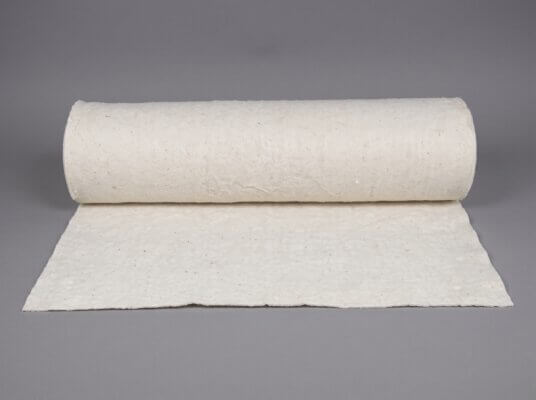
He transformed the spinning mill into a pioneer of surgical dressings, absorbent cotton wool, and medical wadding—laying the groundwork for modern medical textiles.

  • Introduced commercial absorbent cotton wool production.
  • Pioneered surgical wadding for hospital distribution.
  • Established the name Cowens as an industrial hallmark.

20th Century Stewardship

The Trimble Family

The Trimble family served as long-standing directors and key leaders, providing steady leadership through both World Wars and crucial post-war modernization.

  • Over 50 years of steadfast directorship and stewardship.
  • Steered wartime medical production during severe material shortages.
  • Preserved the mill’s local Dalston workforce traditions.

1900s – Present

The Coulthard Family

For generations, the Coulthard family has spearheaded modern operations.
From Joseph Coulthard to George Coulthard, Michael Coulthard (ret. 1994), and current Managing Director Jonathan Coulthard, they transformed Cowens into a global non-woven specialist.

  • Expanded peak employment to over 300 staff members.
  • Pioneered non-woven filter media and technical textiles.
  • Jonathan Coulthard established sole ownership in modern era.

Chronological History

The Journey Through Time

Explore the key historical epochs that shaped Ellers Mill into a living piece of industrial history.

1782
Construction & Water Power

Built on the River Caldew

A four-story red sandstone cotton spinning mill was constructed along the banks of the River Caldew at Buckabank in Dalston. Utilizing raw water power harnessed from the river, the mill joined Cumbria’s early textile revolution.

1799–1815
Wartime Effort

Napoleonic War Adaptations

During the height of the Napoleonic Wars, Ellers Mill expanded its output. Along with textile processing, the water wheel powered tool forging, grain processing, and tough coarse fabrics supplied for military field equipment.

1821
Jacob Cowen Era

Pioneering Surgical Absorbent Cotton

Jacob Cowen took over the site, establishing Jacob Cowen & Sons Ltd. He converted the site into a specialist absorbent cotton wool factory, creating medical wadding distributed across the Empire.

1901
Reconstruction

The Great Mill Fire

A devastating fire, caused by a lightning strike, severely damaged the original four-story mill building. Undeterred, the owners rebuilt and modernized the facility with improved fireproofing, earning the moniker “The Cotton Wool Factory”.

1914–1918
First World War

Field Hospital Medical Supply

During WWI, Ellers Mill operated around the clock under government control. It produced hundreds of tons of purified surgical cotton wool, field dressings, and medical wadding for military hospitals across Europe.

1939–1945
Second World War

Home Front & Military Aid

Under the guidance of the Cowen, Trimble, and Coulthard families, the mill again served as a vital strategic asset, supplying essential medical wadding for Allied military and civilian emergency medical services.

1995–Present
Innovations

Non-Woven Filtration & Global Reach

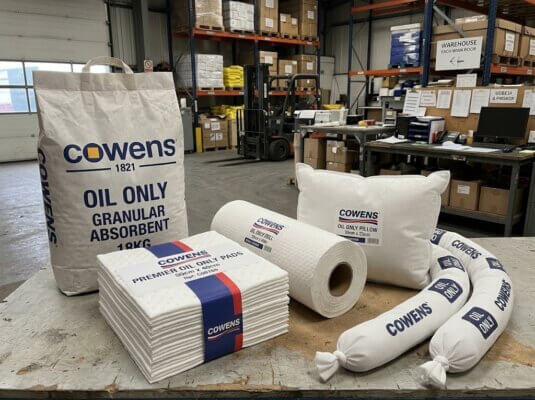
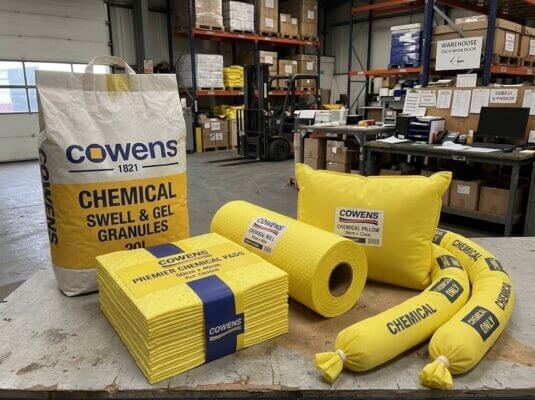
Under Managing Director Jonathan Coulthard, Cowens transformed into an engineering leader for non-woven technical fabrics and industrial filter media.

Energy & Technology

The Power Evolution

How Ellers Mill adapted its energy sources across 240+ years to remain efficient and sustainable.

Harnessing the River Caldew → Modern Eco Power

From a 100% hydro-powered waterwheel on the River Caldew in 1782, through Victorian steam boilers and 1950s post-war electrification, to modern roof-mounted solar photovoltaic energy, Ellers Mill has continuously transformed to keep Cumbrian manufacturing sustainable.

240+ Years

Continuous Energy Evolution